SEARCH WHAT YOU WANT
Domestic Greenhouse Intelligent Equipment Drives the Transformation of Protected Agriculture from "Labor-Intensive" to "Technology-Intensive" From "Sweat Agriculture" to "Smart Agriculture": A Quiet Revolution
2026-01-23
Traditionally, agriculture has been regarded as a typical labor-intensive industry—farmers toil under the sun, relying on the weather and experience for harvest. However, in recent years, with the rapid development and application of domestic intelligent equipment, protected agriculture is undergoing a profound transformation from "labor-intensive" to "technology-intensive."
In this transformation, several types of domestic intelligent equipment are playing a key role:
I. The "Five-Piece Set" of Intelligent Equipment: Redefining Farming
"Piercing Eyes" – Environmental Monitoring Sensor System
Walking into the smart greenhouse of Beijing Jingpeng Technology, a row of inconspicuous small boxes hangs on the wall, real-time monitoring temperature, humidity, light intensity, carbon dioxide concentration, as well as soil EC value and pH value. These sensors are like the "nervous system" of the greenhouse, collecting data every 5 minutes and feeding it back to the "brain" – the central control system.
"Steel Farmers" – Agricultural Robot Corps
In a vertical farm in Kunshan, Jiangsu Province, rows of "planting robots" move along tracks, accurately delivering nutrient solution to the roots of each lettuce plant. Not far away, "harvesting robots" use visual recognition technology to judge the ripeness of tomatoes, gently pick them with flexible robotic arms, and place them into sorting baskets. A single harvesting robot can complete the workload of 8 skilled workers a day, operating around the clock without time restrictions.
"Smart Steward" – IoT Control System
Through a mobile APP or computer, farmers can remotely control all greenhouse operations such as window opening, sunshade, irrigation, and fertilization. The system can also automatically adjust strategies based on weather forecasts – if tomorrow is sunny, it will reduce watering tonight; if a temperature drop is imminent, it will start the heating system in advance.
"Aerial Vision" – UAVs and Remote Sensing Monitoring
UAVs equipped with multispectral cameras patrol the fields once a week, generating crop growth maps, pest and disease distribution maps, and moisture distribution maps. These data are integrated with ground sensor data to form a complete crop growth record.
"Digital Brain" – AI Decision-Making and Big Data Platform
Massive amounts of data converge on the cloud platform. AI algorithms analyze historical data, current status, and market forecasts to provide planting suggestions: when to sow, when to fertilize, when to harvest, and even which varieties to grow for higher returns.
II. From "Knowing How to Farm" to "Wisdom Farming": How Technology Changes Agricultural Genes
The popularization of domestic intelligent equipment is profoundly changing every link of protected agriculture:
Fundamental Transformation of Labor Structure
"In the past, one greenhouse required 2-3 full-time workers; now one person can manage 5-8 smart greenhouses," said a person in charge of Shouguang Agriculture and Rural Bureau. "But this is not simply downsizing; it is labor upgrading – we no longer need purely manual laborers, but new farmers who understand technology and can operate intelligent equipment."
Precision Revolution in Production Models
Traditional agriculture relies on unified management, while intelligent equipment makes "personalized planting" possible. In the same greenhouse, tomatoes in different areas may receive different water and fertilizer schemes – more water is appropriately supplied to the east where light is strong, and trace elements are additionally supplemented to the west where soil nutrients are low.
Leapfrog Improvement in Resource Efficiency
Research by the Chinese Academy of Agricultural Sciences shows that smart greenhouses save 50%-70% water, 30%-50% fertilizer, and more than 60% pesticides compared with traditional greenhouses, while unit area yield increases by 1-3 times. More importantly, intelligent equipment enables new models such as "vertical agriculture" and "plant factories."
In the future, we may see:
Fully Autonomous Unmanned Farms: The entire process from sowing to harvesting is completed by machines, with humans only responsible for monitoring and decision-making.
AI Breeding Accelerators: Shortening crop breeding cycles from several years to several months through big data and artificial intelligence.
Blockchain Traceability Systems: Consumers can scan a QR code to view the complete journey of agricultural products from seed to table.
Personalized Nutritional Agriculture: Customizing planting schemes based on consumers' health data to produce "customized vegetables."
"Future farmers will be 'agricultural managers' sitting in offices, analyzing data, optimizing algorithms, and managing robot teams," Professor Li Daoliang from China Agricultural University depicted such a scenario. "Agriculture will no longer be synonymous with dirt, toil, and hardship, but a high-tech, high-benefit sunrise industry."
From "labor-intensive" to "technology-intensive," this transformation is not only a change in production methods but also an important milestone in China's agricultural modernization. The rise of domestic intelligent equipment has not only improved agricultural production efficiency but also reshaped the industrial form of agriculture and the professional image of farmers.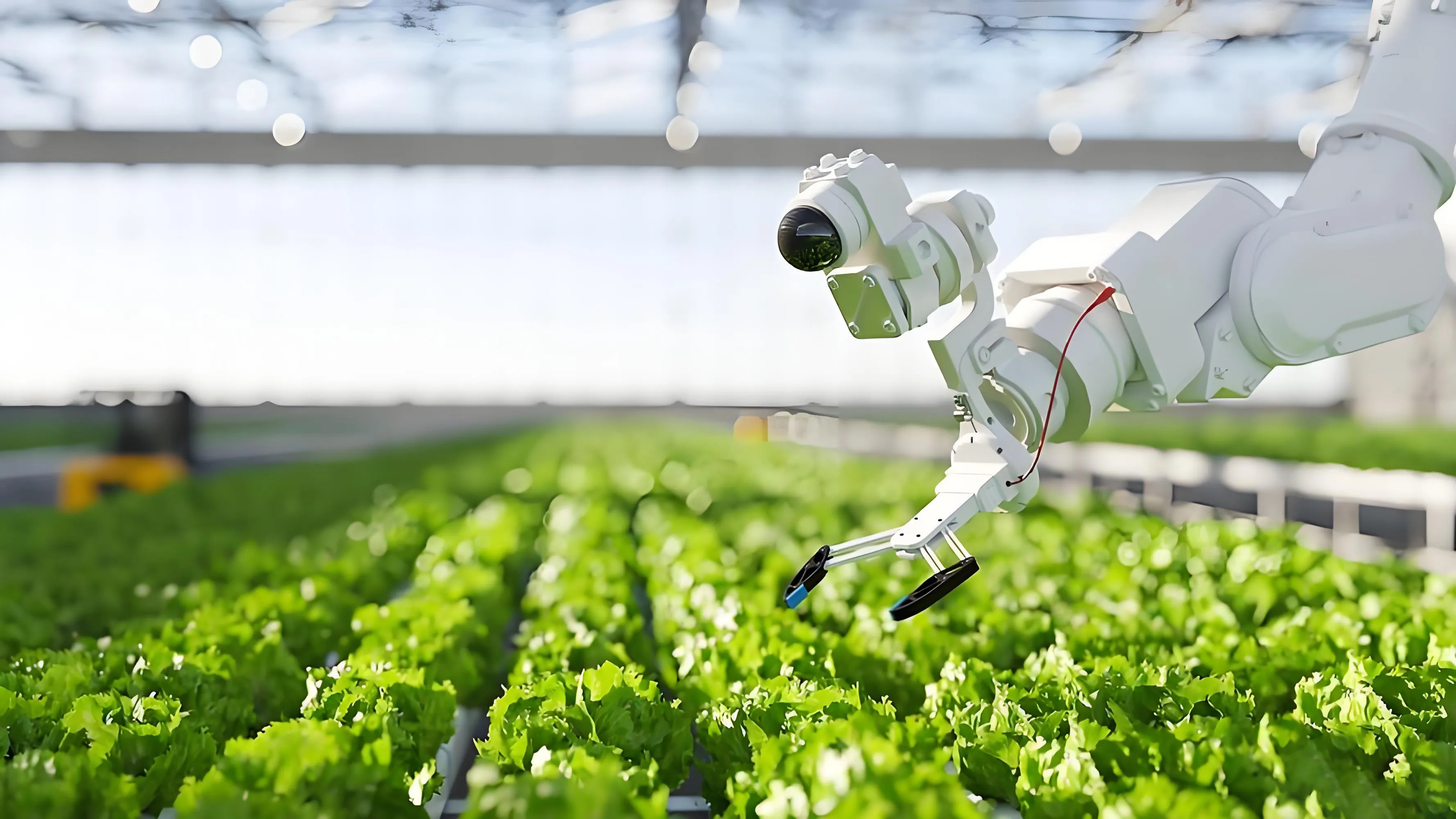
Traditionally, agriculture has been regarded as a typical labor-intensive industry—farmers toil under the sun, relying on the weather and experience for harvest. However, in recent years, with the rapid development and application of domestic intelligent equipment, protected agriculture is undergoing a profound transformation from "labor-intensive" to "technology-intensive."
In this transformation, several types of domestic intelligent equipment are playing a key role:
I. The "Five-Piece Set" of Intelligent Equipment: Redefining Farming
"Piercing Eyes" – Environmental Monitoring Sensor System
Walking into the smart greenhouse of Beijing Jingpeng Technology, a row of inconspicuous small boxes hangs on the wall, real-time monitoring temperature, humidity, light intensity, carbon dioxide concentration, as well as soil EC value and pH value. These sensors are like the "nervous system" of the greenhouse, collecting data every 5 minutes and feeding it back to the "brain" – the central control system.
"Steel Farmers" – Agricultural Robot Corps
In a vertical farm in Kunshan, Jiangsu Province, rows of "planting robots" move along tracks, accurately delivering nutrient solution to the roots of each lettuce plant. Not far away, "harvesting robots" use visual recognition technology to judge the ripeness of tomatoes, gently pick them with flexible robotic arms, and place them into sorting baskets. A single harvesting robot can complete the workload of 8 skilled workers a day, operating around the clock without time restrictions.
"Smart Steward" – IoT Control System
Through a mobile APP or computer, farmers can remotely control all greenhouse operations such as window opening, sunshade, irrigation, and fertilization. The system can also automatically adjust strategies based on weather forecasts – if tomorrow is sunny, it will reduce watering tonight; if a temperature drop is imminent, it will start the heating system in advance.
"Aerial Vision" – UAVs and Remote Sensing Monitoring
UAVs equipped with multispectral cameras patrol the fields once a week, generating crop growth maps, pest and disease distribution maps, and moisture distribution maps. These data are integrated with ground sensor data to form a complete crop growth record.
"Digital Brain" – AI Decision-Making and Big Data Platform
Massive amounts of data converge on the cloud platform. AI algorithms analyze historical data, current status, and market forecasts to provide planting suggestions: when to sow, when to fertilize, when to harvest, and even which varieties to grow for higher returns.
II. From "Knowing How to Farm" to "Wisdom Farming": How Technology Changes Agricultural Genes
The popularization of domestic intelligent equipment is profoundly changing every link of protected agriculture:
Fundamental Transformation of Labor Structure
"In the past, one greenhouse required 2-3 full-time workers; now one person can manage 5-8 smart greenhouses," said a person in charge of Shouguang Agriculture and Rural Bureau. "But this is not simply downsizing; it is labor upgrading – we no longer need purely manual laborers, but new farmers who understand technology and can operate intelligent equipment."
Precision Revolution in Production Models
Traditional agriculture relies on unified management, while intelligent equipment makes "personalized planting" possible. In the same greenhouse, tomatoes in different areas may receive different water and fertilizer schemes – more water is appropriately supplied to the east where light is strong, and trace elements are additionally supplemented to the west where soil nutrients are low.
Leapfrog Improvement in Resource Efficiency
Research by the Chinese Academy of Agricultural Sciences shows that smart greenhouses save 50%-70% water, 30%-50% fertilizer, and more than 60% pesticides compared with traditional greenhouses, while unit area yield increases by 1-3 times. More importantly, intelligent equipment enables new models such as "vertical agriculture" and "plant factories."
In the future, we may see:
Fully Autonomous Unmanned Farms: The entire process from sowing to harvesting is completed by machines, with humans only responsible for monitoring and decision-making.
AI Breeding Accelerators: Shortening crop breeding cycles from several years to several months through big data and artificial intelligence.
Blockchain Traceability Systems: Consumers can scan a QR code to view the complete journey of agricultural products from seed to table.
Personalized Nutritional Agriculture: Customizing planting schemes based on consumers' health data to produce "customized vegetables."
"Future farmers will be 'agricultural managers' sitting in offices, analyzing data, optimizing algorithms, and managing robot teams," Professor Li Daoliang from China Agricultural University depicted such a scenario. "Agriculture will no longer be synonymous with dirt, toil, and hardship, but a high-tech, high-benefit sunrise industry."
From "labor-intensive" to "technology-intensive," this transformation is not only a change in production methods but also an important milestone in China's agricultural modernization. The rise of domestic intelligent equipment has not only improved agricultural production efficiency but also reshaped the industrial form of agriculture and the professional image of farmers.
Previous: No more data

Sinok is recognized as one of China's pioneering leaders specializing in the design, manufacturing and construction of greenhouses
Copyright © 2026 Shandong Sinok AgricultureTechnology Co.,Ltd.