SEARCH WHAT YOU WANT
Intelligent Greenhouse: From "Production Facilities" to "Agricultural Brains"
2026-01-23
Faced with the dual challenges of climate change and industrial upgrading, intelligent greenhouses have evolved from simple "production facilities" to "data-driven agricultural decision-making systems"—the "agricultural brains" of modern agriculture. Through technological integration, they create a stable and customizable optimal growth environment for crops, serving as a key infrastructure to ensure food security, improve agricultural efficiency, and accelerate scientific research and innovation.
I. What is an Intelligent Greenhouse?
An intelligent greenhouse is a modern planting environment integrating data collection, central computer control, and automatic equipment control. Its core lies in building an "agricultural brain" based on IoT greenhouse environment monitoring technology and various automated facilities. By inputting crop growth model parameters, it realizes unmanned automatic environmental regulation; meanwhile, the continuously collected precise data in turn nourishes and optimizes this "brain," providing a basis for expert decision-making and system self-learning, and truly forming a closed loop from perception to decision-making and from control to optimization.
II. Working Principle of the Intelligent Greenhouse Monitoring and Management System
The system collects environmental information through sensors for temperature, humidity, soil temperature and humidity, etc., transmits it to a converter via wired or wireless means, and finally displays it on the main control computer to realize data storage, query, and alarm functions. The monitoring center compares the collected data with the set values; when exceeding the range, it triggers multi-channel alarms through the screen, SMS, or voice, and simultaneously issues instructions to on-site controllers to adjust equipment such as fans and wet curtains for cooling and humidification. Manual sound and light alarms can also be activated to notify managers for intervention.
For a single greenhouse, a wireless sensor network can be constructed. Sensor nodes monitor indicators such as substrate humidity, composition, pH value, air temperature and humidity, air pressure, light, and carbon dioxide concentration. Combined with model analysis, it automatically regulates the environment as well as irrigation and fertilization operations to provide suitable conditions for crop growth.
III. Advantages of Intelligent Greenhouses
1. Stable Environment and Risk Resistance: It buffers the impact of extreme climates, reduces production uncertainty, and ensures the year-round stable supply of crops. 2. Precise Resource Utilization for Efficiency and Cost Reduction: Digitalized on-demand management of water, fertilizer, light, and temperature improves resource utilization, increases yield and quality, and optimizes costs. 3. Data-Driven Standardization: It converts agronomic experience into replicable data models, reduces reliance on personal experience, and realizes intelligent and standardized production. 4. Flexible Configuration for Diverse Scenarios: The modular design can quickly respond to the needs of large-scale production, seedling cultivation, scientific research experiments, leisure agriculture, etc.
IV. Significance of Intelligent Greenhouse
The larger the greenhouse scale and the higher the crop value, the greater the management difficulty and risk. The remote monitoring function of intelligent greenhouses enables comprehensive control over the environment and crop growth status of each greenhouse. As a new model to make up for the shortcomings of traditional agriculture, it promotes the refinement and intelligence of greenhouse production, reduces the cost of information collection, processing, and transmission, optimizes agricultural resource allocation, and improves the working environment of operators. Especially in large-scale production, it provides a scientific basis for precise regulation, yield and quality improvement, growth cycle adjustment, and economic benefit enhancement. Relying on network technology, intelligent greenhouse cultivation breaks seasonal restrictions, makes greenhouse management more efficient and precise, and is the mainstream direction of modern agricultural development.
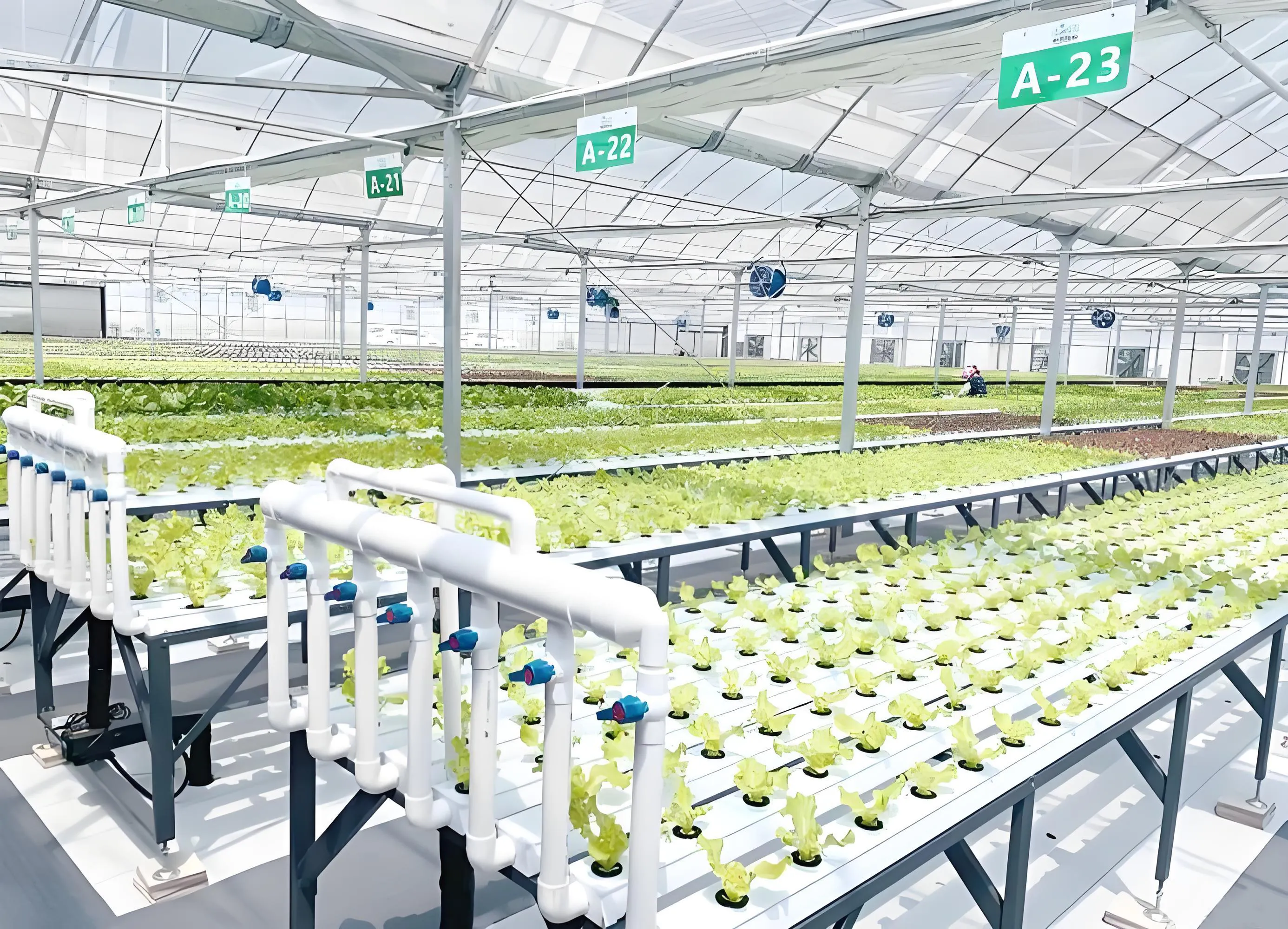
Faced with the dual challenges of climate change and industrial upgrading, intelligent greenhouses have evolved from simple "production facilities" to "data-driven agricultural decision-making systems"—the "agricultural brains" of modern agriculture. Through technological integration, they create a stable and customizable optimal growth environment for crops, serving as a key infrastructure to ensure food security, improve agricultural efficiency, and accelerate scientific research and innovation.
I. What is an Intelligent Greenhouse?
An intelligent greenhouse is a modern planting environment integrating data collection, central computer control, and automatic equipment control. Its core lies in building an "agricultural brain" based on IoT greenhouse environment monitoring technology and various automated facilities. By inputting crop growth model parameters, it realizes unmanned automatic environmental regulation; meanwhile, the continuously collected precise data in turn nourishes and optimizes this "brain," providing a basis for expert decision-making and system self-learning, and truly forming a closed loop from perception to decision-making and from control to optimization.
II. Working Principle of the Intelligent Greenhouse Monitoring and Management System
The system collects environmental information through sensors for temperature, humidity, soil temperature and humidity, etc., transmits it to a converter via wired or wireless means, and finally displays it on the main control computer to realize data storage, query, and alarm functions. The monitoring center compares the collected data with the set values; when exceeding the range, it triggers multi-channel alarms through the screen, SMS, or voice, and simultaneously issues instructions to on-site controllers to adjust equipment such as fans and wet curtains for cooling and humidification. Manual sound and light alarms can also be activated to notify managers for intervention.
For a single greenhouse, a wireless sensor network can be constructed. Sensor nodes monitor indicators such as substrate humidity, composition, pH value, air temperature and humidity, air pressure, light, and carbon dioxide concentration. Combined with model analysis, it automatically regulates the environment as well as irrigation and fertilization operations to provide suitable conditions for crop growth.
III. Advantages of Intelligent Greenhouses
1. Stable Environment and Risk Resistance: It buffers the impact of extreme climates, reduces production uncertainty, and ensures the year-round stable supply of crops. 2. Precise Resource Utilization for Efficiency and Cost Reduction: Digitalized on-demand management of water, fertilizer, light, and temperature improves resource utilization, increases yield and quality, and optimizes costs. 3. Data-Driven Standardization: It converts agronomic experience into replicable data models, reduces reliance on personal experience, and realizes intelligent and standardized production. 4. Flexible Configuration for Diverse Scenarios: The modular design can quickly respond to the needs of large-scale production, seedling cultivation, scientific research experiments, leisure agriculture, etc.
IV. Significance of Intelligent Greenhouse
The larger the greenhouse scale and the higher the crop value, the greater the management difficulty and risk. The remote monitoring function of intelligent greenhouses enables comprehensive control over the environment and crop growth status of each greenhouse. As a new model to make up for the shortcomings of traditional agriculture, it promotes the refinement and intelligence of greenhouse production, reduces the cost of information collection, processing, and transmission, optimizes agricultural resource allocation, and improves the working environment of operators. Especially in large-scale production, it provides a scientific basis for precise regulation, yield and quality improvement, growth cycle adjustment, and economic benefit enhancement. Relying on network technology, intelligent greenhouse cultivation breaks seasonal restrictions, makes greenhouse management more efficient and precise, and is the mainstream direction of modern agricultural development.

Sinok is recognized as one of China's pioneering leaders specializing in the design, manufacturing and construction of greenhouses
Copyright © 2026 Shandong Sinok AgricultureTechnology Co.,Ltd.